
Why play can help children express big feelings
A child does not always have a ready answer to “How are you feeling?” The question may arrive at the end of a long day, when their thoughts are tangled or their attention has already moved elsewhere. Sometimes a story, a drawing or a game offers another way into the conversation. This article introduces that possibility without suggesting that every difficult moment needs therapy.
Willow Grove is a fictional practice. The examples below describe its imaginary approach and are general educational material, not an assessment of any child or a promise of change. A real professional would discuss a child's needs, family circumstances and appropriate support before recommending a service.
More than finding the right words
Play can give children ways to communicate that do not depend entirely on an adult conversation. A child might build a scene, choose a character or repeat a familiar story. That activity can be meaningful even when the child does not explain it. The NHS notes that younger children express themselves through play as well as words; a parent need not turn every game into an interview to take their child seriously.
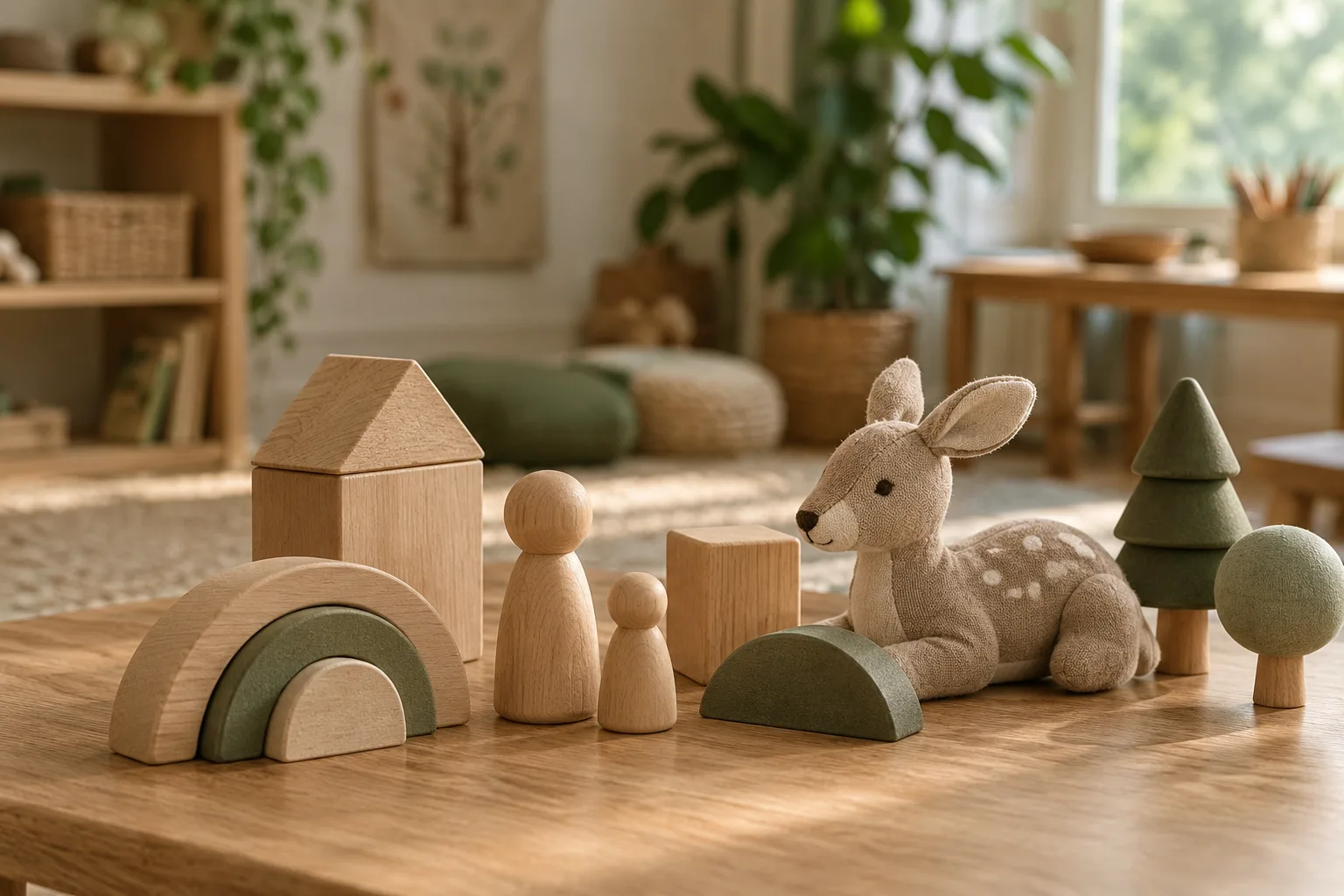
In the imaginary Willow Grove room, there would be a choice of simple materials: figures, blocks, paper, paints and a sand tray. These are invitations, not tests with a correct answer. A child who prefers quiet construction would not need to perform an emotional story. Another might enjoy speaking while drawing. The point of offering choices is to leave room for different ways of taking part.
A relationship, not a collection of toys
The Association for Play Therapy describes play therapy as work carried out within a therapeutic relationship. That distinction matters. A pleasant room and attractive materials do not, by themselves, make an activity therapy. In real practice, the professional's training, judgement, boundaries and relationship with the child are part of the work.
Our fictional therapist, Maya Bennett, would explain her role before inviting a child into the room. She would describe what can be chosen, what keeps everyone safe and how the meeting ends. Her imagined style is calm and attentive: noticing without rushing to interpret, allowing a pause and explaining a limit in language a child can understand. These details illustrate a possible setting rather than a universal method.
What a parent might notice
A parent may be curious about why a child chose a particular toy or repeated a game. Curiosity is understandable, but there is no reliable dictionary in which one toy always means one feeling. A drawing cannot establish a diagnosis. Context matters, and a real therapist would avoid making a large conclusion from one small moment.
At Willow Grove, the fictional parent conversation would focus on agreed goals and practical observations. How are mornings going? Has there been a change at school? What feels easier or harder at home? A parent could share information without being expected to decode every part of the child's play. The imagined process leaves space for uncertainty and for the child's own meaning.
Keeping expectations realistic
Families deserve a clear explanation of what is being offered and how it will be reviewed. There is no fixed number of sessions that suits every child, and this demonstration cannot say whether play therapy would be appropriate for someone visiting the site. A real service should discuss alternatives, consent, costs, confidentiality and what happens if the approach does not meet the family's needs.
If you are considering support, it can help to ask a qualified local professional how they assess suitability and involve caregivers. You can also ask how progress is discussed and what qualifications or supervision apply in your jurisdiction. Our fictional biography is not evidence of a real person's competence or registration.
A gentle starting point
Listening does not always require a perfect question. Sometimes it begins with giving a child time, noticing what they enjoy and allowing them to say as much or as little as they can. Everyday play and professional therapy are different, but both remind us that communication can take more than one form.
For an illustration of the setting, explore our Play Therapy page or read what a first visit might look like. The demo enquiry form is for fictional test messages only; it does not offer treatment or appointments.